Mobile
This year at FoE, I'll be engaging a panel of great speakers to have a slightly different conversation about location, beyond the usual marketing and technology-focused discussions. With mobile and location-based services on the rise, it is increasingly important think about how these technologies, the behaviors they enable, and the data they produce change how we encounter the spaces we inhabit and interact with one another within them.
As a quick introduction, I wanted to share a little background on our panel:
Tell us a little bit about what you're currently working on and why:
Andy Ellwood: I am currently heading up the business development efforts for Gowalla. We are working with brands and partners around the world as it pertains to the interactions and engagements that our millions of users are creating as it pertains to the stories that they tell about the places that they go.
Dan Street: Hi. I'm CEO of Loku. We bring Big Data tools to Local. You can think of us as a search engine that's specific to local information.
Germain Halegoua: I'm currently working on a few different projects, all related to location or physical place in some way. I'm finishing up a research project about the relationships between vendors and customers over location-based services as well as other social media platforms. I'm beginning to interview people about how they use Google Street View for purposes other than navigation and to examine the participatory cultures that are being formed around StreetView. Mary Gray, Alex Leavitt, and I are working on a project about Foursquare "jumpers" (people who check-in to locations when they're not physically in that location). I'm also working on a collaborative mapping and digital storytelling project that involves bike accidents reported to the Madison, WI Police Department between 2008-2011.
I think it's important to understand what people actually do with navigation and location-
based technologies and the cultures that surround these activities. Frequently, actual
practices tend to differ from intended use, and I think it's important to notice when
and why this happens. All of my current projects deal with social power in some way
(juxtaposing official and vernacular knowledge and experience of place; engaging with
location-based technologies in alternative or oppositional ways; trying to exert control
of customer-vendor relations through location-based technologies) which is a concept
that is under-examined in location-based social media but something that is incredibly
important to understand as more people engage with these systems.
Tell us a little bit about your background and the perspective it brings to your interests:
Andy Ellwood: My background is in sales, most recently selling private jets before jumping into the digital world.
Dan Street: My background is strategy consulting and private equity, in technology and media companies.
Germain Halegoua: My interest in social media and location-based technologies actually stems from studying and participating in documentary film, public access television, and media
activism in NYC. Working on these projects, I observed the ways in which people
harnessed and produced media in order to understand and augment their connection
to local issues, mobilize their neighborhoods, explore their city, and express their social
position within urban space. People have been using technologies to represent and play
with location, and using location to contextualize their experiences, for some time now.
I see activities like "check-ins" and location announcement as an extension of these
mediated practices. Because of my past experiences, I think I'm more apt to think about
a "check-in" as more than "just a check-in," and a lot of my research is driven by the
desire to find out what that means.
How did you first become involved and interested in creating/researching location-based data/interaction/technology? Was there a particular aspect or incident that drew you?
Andy Ellwood: My attraction to tech and digital specifically focused on the ability to take online experiences live and deepen relationships with friends and trusted brands.
Dan Street: I jumped into local both because I care - I'm from a small town, and want to bring some of those dynamics to an urban world - and also because it's a largely untapped opportunity.
Germain Halegoua: I think it might have been when I bought my first cell phone. It was just a bare-bones cell phone with no SMS plan at first (and definitely no apps or web browsing, etc), but it got me thinking about communication, information, and location in a totally different way.
[This post originally appeared at canarytrap.net]
Earlier this month, amongst all the frustration, euphoria, and confused wonder surrounding the events in Egypt, Malcolm Gladwell and others got mired in another discussion regarding the relative efficacy of social media in creating political change.
I don't want to rehash the back and forth (some thoughtful opinions here, here, and here), except to say that I empathize with Gladwell's frustration, I really do, but I think that his push-back isn't particularly illuminating or necessary. It's true that some of the over-emphasis on the role of social media runs the risk of overshadowing more considered analysis of the historical context and implications of what happened in Egypt. And I have to admit that seeing some of the twitter and foursquare jokes made me bristle with annoyance briefly (not because they were making light of the situation, but because they made light of the privilege we had, as media and communications professionals in the US, in being able to be cute about it all). Maybe its a function of my youthful optimism, but I think Gladwell does a disservice in validating these strawmen as something worth arguing against.
For me, claims that social media brought forth the revolution in Egypt exist so deep within a territory of techno-narcissism that isn't really even worth refuting. And it's not unexpected -- these technologies are still relatively new. We're still trying to sort out what they can do. If we look at early film and TV criticism, so much focused on the "how" over the "why" in the same way that Gladwell laments, and it didn't prevent the "why" (and the "what") from dominating the discourse as the novelty wore off.
But more importantly, I think his arguments about social media not being relevant to revolutions makes the same awkward assumption as the claims that facebook changed Egypt: that what's compelling about what happened online has everything (or anything) to do with Egypt per se. Maybe because I think of them as dramatically important in totally different arenas, I don't see the emphasis on one or the other in competition with one another for column pixels. Because something significant did happen on and to social media, but to think it was what twitter and Facebook did (or didn't do) for Egypt is to have things backwards. Twitter didn't happen to Egypt; Egypt happened to twitter and is may be transforming how we think about the role of social media in our lives and communities.
Continue reading "Twitter, Gladwell, and Why Social Media's Revolutionary Potential Isn't (Really) About Egypt" »
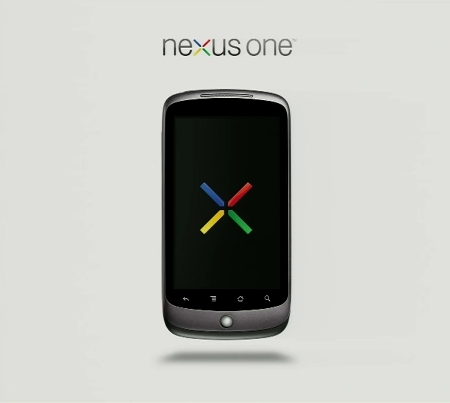
For the past two years, rumors have been swirling around the Internet regarding a potential attempt by Google to compete in the cell phone industry. Today, the monolithic company has entered the ring with its new product, the Nexus One smartphone superphone. You can read more about the new phone by visiting Gizmodo's succinct coverage page.
I spent a good portion of the afternoon today watching a live feed of Google's official presentation of the Nexus One. The phone is certainly faster, prettier, and boasts a number of new features, but I hesitate to agree with its manufacturers that the Nexus One -- "the Google phone" -- would be the smartphone to blow away the competition. The Google representatives at the event continued to emphasize the vibrant ecosystem that exists between Google, its phone application producers, and its app-store customers, but it's really nothing new considering Google's first venture into the phone sector with the company's application of its Android operating system to the HTC Dream (commonly known as the G1).
Many of the circulated rumors a few years ago focused on the implementation of the Google Voice service into a Google-produced cell phone, which would allow for free calls (therefore eliminating the necessity of paying for a yearly phone service). Back in March, the New York Times covered the threat of the Voice service in its article, Google's Free Phone Manager Could Threaten a Variety of Services , where Phil Wolff (editor of Skype Journal) states:
I would consider Google to have the potential to change the rules of the game because of their ability to bring all kinds of people into their new tools from their existing tools.
The potential for Google to change the rules of an entire industry is what most people expected from the Nexus One. However, Google made little surprises this afternoon, and this absence of novelty seems to have spurred a much different set of questions, away from new features and pricing schemes, in the question-and-answer session after the presentation.
In the Q&A session, a major concern of the audience centered on the difference between Google as a company and Google as a service. Mario Queiroz stated during the presentation that anyone who visits Google.com is a Google customer. However, Siva Vaidhyanathan argues in his CMS lecture, "The Googlization of Everything" (you can listen to the podcast here) that we are actually Google's users and hence product, instead of the company's customers. We produce information for Google's services and algorithms, while at the same time we interact with Google mainly in a non-monetary relationship (in that we do not spend money on most of Google's services and even in some instances are instead paid).
The concern of the audience, then, seemed to point out that with the Nexus One, Google is now attempting to act as a retailer. Google makes an effort to argue that they are not the manufacturer of the Google Phone hardware and instead are only the distributor of it. But this relationship between producer, consumer, and distributor is beginning to shape the web ecosystem in a new way.
The Nexus One's motto, if you visit the Google.com/phone webpage, is "Web meets phone." But I would argue that Google's strategy is instead pushing their phone to meet the Web. If we consider the motto, Google has already put the Web -- especially the Google-mediated Web -- into the G1 and its brethren. So what do I mean by drawing an antithesis with "Phone meets Web"? In the past, Google has made its services and Android system available through cell phone providers' phones. However, with the Nexus One, Google is attempting to push a phone under the guise of the Google brand to encapsulate its existent services. The previous Android-utilizing phones were associated with Google, but were not emphasized as Google-sponsored phones. However, now that Google is marketing the Nexus One as its own product, it is creating a new relationship with the customers who buy the phone. In its most basic form, Google is the producer and its customers are the consumer. But as I mentioned previously, Google is trying to avoid being associated at the phone's makers, thereby identifying the company as the phone's distributor. The company is distancing itself from the product but maintaining a relationship with the phone, hence drawing in Google loyalists or general users that trust in the Google brand.
This distributor identity has already appeared across the Web in many forms. For example, take Hulu as a case study: Hulu is maintained by a partnership of large television studios, but avoids direct association with those companies (eg., NBC) by sustaining the Hulu name. Therefore, users of Hulu associate the content available on the website with Hulu instead of television networks. Differently, though, Google occupies both spaces: with the Nexus One, it acts as a distributor of the phone, but as a monopolizing company (with the many pre-phone services that people associate with Google) Google still acts as the producer of those services. The problem, therefore, derives from the conflation of Google as both maker and deliverer. This distinction is important, though, because it affects how Google's users/customers/products associate with the company, which subsequently affects user loyalty.
Ths site for C3's annual conference, the Futures of Entertainment, now in its third year, is now live.
Registration information will be soon to follow, and be sure to check in for updates to speaker lists as we start to finalize our panels in the upcoming weeks. This year promises to be exciting and provocative, as we push our themes of convergence and media spreadability onto the global stage, while not losing sight of central C3 issues such as transmedia storytelling and audience value.
To get an idea of what the Futures of Entertainment conference is like, check out last year's site and listen or view the podcasts.
More to come!
There has been much made lately of the tech sector's newest favorite buzzword: cloud computing. Like many such newly-minted terms, there is some dispute about its actual definition; I wrote about one such permutation in a previous entry for the C3 Weekly Newsletter when the MacBook Air was about to be unveiled at the Macworld conference in January. In it, I conflated the terms 'cloud computing' with 'ubiquitous computing', but in retrospect I should pull the two terms apart somewhat. They're still linked at a very basic level -- both cloud computing and ubiquitous computing hinge on the idea of decentralization, which I'll get back to in a bit -- but by attempting to distinguish these two terms, we begin to gain a clearer idea of where our digital culture is heading next.
Continue reading "Moving Into the Cloud." »
A few days ago, Nielsen released a report where they estimated that 58 million Americans had seen advertising on their phones in the last month. Even though no one would debate that's a lot of people, it represents 23%, less than a quarter, of subscribers in the U.S.
And that number might be a little high.
According to Nielsen's site, the findings were based on a survey of 22,000 people who were "active mobile data users who used at least one non-voice mobile service in the fourth quarter," suggesting that the respondents may be more open to or better able to receive advertising in a variety of formats than the average subscriber.
Clearly, there is growing interest in mobile as an advertising channel, but the study found that just 10% of respondents thought that "advertising on their mobile device was acceptable."
Continue reading "Mobile Marketing: More Ads on the Go? (Part I)" »
The latest news coming out about an online series ties into writing we've been doing here at the Convergence Culture Consortium about online video, branded entertainment, and soap operas. Procter & Gamble's Tide brand will be the sponsor of a new broadband series through GoTV Networks, a 10-parter called Crescent Heights.
The series, written by Mike Martineau of Rescue Me fame (see this post relating to Jason Mittell's writing about the FX series and how he feels it serves as a hypermasculine soap opera), will be available not just through Tide's Web site but also through mobile providers as well.
Continue reading "New Tide-Sponsored Online/Mobile Video Series" »
Our continued discussions here about transmedia storytelling and the potential for new models for telling stories, gaining revenue, and consuming media properties remains reliant on the gradual acceptance of these new technologies and the infrastructure--both in terms of technology and business models--that surround them. This was a major focus of several of my posts here last week, focusing on the rate of technological change, realities of the digital divide, measurement systems, and cultural practices.
While thinking about some of these issues, I was paying particularly close attention to a couple of recent news stories.
First, ComScore--the main competitor for Nielsen NetRatings--sounds like they are moving in quite a different direction than Nielsen. While Nielsen is focusing its ratings toward time spent on a page more than total number of views, ComScore's shift in practice will move toward targeting less active viewers instead of the active minority.
Continue reading "New Measurement and Monetizing Efforts on Web, Mobile Platforms" »
Back in March, I wrote about the launch of plans for NBC Universal's mobile plan on Verizon and MobiTV. The deal included television shows from not just NBC but also from USA, Sci Fi, Bravo, Telemundo, and mun2, in addition to CNBC.
Now the network has signed yet another mobile deal to extent the reach of its content into new realms, this time with mobile service provider Alltel. NBC will provide 11 VOD channels, in addition to Web sites, ringtones, wallpapers, and more, featuring content from NBC, Sci Fi, Bravo and the USA Network.
What I like most about NBCU's approach here is that, even as the company has to strike deals individually with various service providers, the plan seems to be to stretch their content offerings across a variety of services, rather than rely on some exclusive partnership with just Verizon or Alltel.
Excerpts from the press release and a link to the full release are available on the Inside Cable News blog.
Continue reading "NBCU Strikes Deal with Alltel, as the Company Tries to Expand Mobile Reach" »
The race for dominance in providing content and a viable site for online video has been very tight in the past year-and-a-half. As AOL tries to establish itself more and more as a content provider rather than a service provider, the company has continued giving a great deal of attention into improving both its content and its services in relation to video.
This week, AOL relaunched its video portal to improve the search functions, as well as to be able to increase access to non-AOL content online and to make the home page reflect such features. The new site allows for playing YouTube videos, among other things.
Continue reading "AOL Video/AOL News Relaunches Emphasize AOL's Continuing Emphasis on Content" »
C3 Alum Geoffrey Long recently alerted me to an interesting study from Jan Chipchase (see his profile here). Jan works as a researcher for the design branch of Nokia, and he both designs new products and tests them.
In the meantime, he publishes a lot of intriguing studies and materials on his personal Web site, enttiled Future Perfect. He writes, "The material that you see on this site is what I do in my spare time--the stuff that inspires or challenges me, helps me understand how the future might turn out."
What caught Geoff's idea was his piece "Where's the Phone?" drawing on research he had done with Cui Yanging and Fumiko Ichikawa, based on a variety of street surveys for Nokia between 2003 and 2006, focusing on "where people carry their mobile phones and why."
Continue reading "What Do People Do with Their Technology?" »
I have mentioned here previously that I write about differences in my former life in Kentucky and life on the East Coast in a weekly column for The Ohio County TImes-News called "From Beaver Dam to Boston." I was in the process of writing my next column when I realized that it might be of interest to readers of the consortium as well, so I thought I would share it here:
My wife and I made a grave mistake. Seeing that I study media technologies, branding, popular culture, and the like, one would think I would be more in-tune with the craze that was taking the country over on Friday, June 29, but I suppose that I'm not as "in touch" as I would like to fancy myself.
Last Thursday, Amanda's laptop battery just quit working. The battery decided it didn't want to charge anymore, so when the computer ran out of energy, the only way that she could use it was to have it plugged into the wall. The battery had a little "X" in the middle in the spot where it usually tells us how much of her battery is charged.
Apparently, it was a problem with the MacBook model, one that they caught but which many users had not fixed in time to stop the computer from, as the genius at the help bar in the Apple store told us, "self-cannibalizing" itself. He claimed all one would have to do is switch out the batteries, but I can't help but wonder if there might be deeper issues that need to be resolved in cases of self-cannibalization.
Continue reading "The Apple iPhone and Brand Fandom" »
Mobile consumer research group Telephia has seen a significant amount of press in the past week, releasing a study at the beginning of last week which found that revenues spent on mobile video tripled in the first quarter of 2007, and then following that up with news that the research firm is being purchased by industry titan Nielsen.
The Nielsen purchase will bolster Telephia's resources while giving the audience measurement company substantial in-roads to the burgeoning mobile market. Rafat Ali with paidContent points out that this comes three weeks after Nielsen announced its Nielsen Wireless initiative for mobile content audience measurement.
See more from Alice Z. Cuneo at Advertising Age.
Their most recent study found that subscriptions to mobile television services actually grew 198 percent from the first quarter of 2006, to approximately $146 million. The estimation is that 8.4 million people in the U.S. subscribe to mobile video, which is about 4 percent of the country's mobile users.
Continue reading "Telephia Finds Mobile Video Subscribers Tripled; Company Purchased by Nielsen" »
World Wrestling Entertainment has started their own Mobile Alerts service that will send fans regular text messages of late-breaking news from the company, as well as polls and trivia. The news portion of WWE Mobile Alerts blends both legitimate updates--wrestlers who are suspended, hired, or fired, for instance--with the capability to use the service as a way to extend the storytelling world.
WWE is uniquely situated by being able to combine what many sports franchises are already doing in the realm of sports reporting--sending game score updates, for instance--with the WWE's fictional world because wrestling is one version of television entertainment that predicates on being a part of the "real world" in a way most other fiction shows don't.
The service costs $3.99 a month. We'll see in the next few months how many fans decide to plunk down the modest fee to be on the cutting edge of the WWE's storylines. If they get a hardcore fan base developed around Mobile Alerts, it could become an essential part of the storytelling device, similar to how the company is using its Web-only video programming to supplement the televised shows.
Does anybody know of similar instances where a "news reporting" mobile service is employed develop a fictional storyworld on a regular basis?
Two interesting transmedia-related articles in The Boston Globe today...
In "The plot thickens" (Subtitle: "Now it's not enough to watch your favorite TV show -- you may soon have to pay to get the full story"), Matt Gilbert offers a good survey of the current experiments in transmedia extensions for television properties:
In the coming months, you and your TV addiction are going to be reeled into an expanded ''environment" of your favorite network show, one that may require a cover charge for entry into certain exclusive zones.
You'll be invited to visit characters' blogs at MySpace.com, or pay for mobile phone episodes (known as mobisodes), or buy DVD packages and video games containing new and additional plot information. Your once-simple affair with your TV ''story" could have as much to do with your PC, your cellphone, and your DVD player as it does with your TV set.
In other words, your relationship is starting to get complicated. Network TV is becoming only the first step in what is known as a "TV series." It's becoming an entry point to show-o-spheres, where you not only watch "24" on Mondays on Fox but you purchase a "24" DVD set that contains clues to the season's big mysteries.
It's a good article which includes most of the new examples that have been surfacing here and in other blogs over the last month or two, and which illustrates the tension between creative and economic motives I've been tracking since the Year of the Matrix.
In "Make way, mainstream TV: mobile video is on the move", Scott Kirsner reviews the now-familiar questions surrounding the rise of mobile video players and content:
"As holiday shoppers evaluate Apple's new $299 video-capable iPod, the question hanging over the entertainment industry is whether the iPod can do for motion pictures what it did for music. Does its arrival signal a transition from the era of scheduled TV, DVDs, and videotapes to the age of Internet downloads?
Nice to see the mainstream press giving this trend some well-due consideration.
(Via Lost Remote)
The first attempts to create interactive TV may have flopped, but the idea keeps cropping up. This time it's being tried by Norwegian broadcaster NRK and Swedish wireless equipment maker LM Ericsson. According to Yahoo! News:
During the six-week test, which started Monday, users can download a program for watching and interacting with the Norwegian youth music program "Svisj" on their mobile phones.
Users can vote for the next music video by pressing a mobile phone key, and chat in writing with each other or the program leaders while watching the show.
Espen Torgersen, a telecommunications analyst with the Carnegie Investment Bank AB, said the extent of interaction of the system may be new, but that many similar projects are under way.
I have to confess I was hoping for something more impressive than the ability to vote on the next TRL video. So far, the killer app of "interactive" TV has been the easy time-shifting enabled by TiVo and the DVR.
NBC is the latest to jump on the Apple iPod bandwagon.
According to an article by Brooks Barnes and Nick Wingfield in Wednesday's Wall Street Journal, the company is joining ABC by providing content that can be downloaded on the video iPod.
For instance, Law & Order and other popular shows will be available for download, as well as shows on the USA Network, the Sci Fi Channel, and classic series such as Alfred Hitchcock Presents, Dragnet, and Knight Rider.
This movement takes Apple farther into the emerging market of video downloads to portable devices, as the company attempts to gain control of content distribution through iTunes.
Again, what might this mean for potential transmedia storytelling?
Cingular Wireless is now offering Web access for laptop users via cellular signals, according to an article by Sara Silver in Wednesday's Wall Street Journal.
The company's BroadbandConnect service is being tested in 16 U.S. cities appears to be working well.
Because of relatively high costs involved at this point, though, Silver writes that the majority of early customers for the service have been businesses.
Boston is one of the cities the service is currently available. What impact might this have on the intersection of these various technologies? The important question is how this might have an impact on people's lives? Do you consider using cellular signals a good model for future companies to profit off Internet access?
A move by some of the biggest Internet sites to make Web sites more accessible to mobile devices could help push public acceptance of using Internet tools in mobile technologies.
According to an article by Jessica E. Vacellaro on the front page of the Personal Journal section of Wednesday's Wall Street Journal, sites such as Google, Yahoo, and Microsoft are making key changes that are allowing for greater use of the sites on portable devices. eBay and Mapquest are also joining in.
It comes as no surprise that these companies are beginning to accept the technology, especially since such a move could stand to expand profit exponentially in providing another new platform for companies to use. It is also important to find ways to make sites work on the smaller screens of these mobile devices, as design issues change dramatically due to the much smaller scale, although Geoff could probably address this aspect of Web design to a much greater degree than I could.
The consensus seems to be that this is the wave of the future. I currently only use my cell phone for old-fashioned conservations, but maybe I'm just the luddite of our squad. I'm fully aware that I might be embracing these technologies along with most of America over the next few years.
Apparently HBO will be offering its shows via Vodafone's 3G mobile phones in Europe. The options (Sex and the City, Six Feet Under, Curb Your Enthusiasm) seem to be shows that have finished their run, so neither Rome nor Deadwood is available, but i4u.com has quite a list of other channels (including MTV, Discovery, Fox, and Eurosport) which are carried via Vodafone in the UK and New Zealand.
It's interesting that one of the side-effects of the convergence of TV and electronic media is the divergence of ways in which people consume that media. I suspect that while it's easier to repurpose existing content for phones and portable video players like the video iPod, the not-too-distant future will see more content being created specifically for mobile platforms. (Whether that content will have to sell itself by association with a pre-existing brand, like the 24 and Lost mobisodes have, is quite another question.)
A couple weeks ago, when the producers of Lost announced a deal to offer exclusive mobisodes through Verizon, I guessed that I wouldn't get a chance to see them until they surfaced (inevitably) as extras on the next set of DVDs.
If 24: The Conspiracy is anything to go by, it looks like that will indeed be the trend; the 24 1-minute mobisodes will be included as part of the Season 4 boxed set when it hits shelves next Tuesday.
Variety.com - '24' offers it all
Variety article reports that the producers of Fox's hit Prison Break are experimenting with some transmedia tactics similar to those that were used in the failed Majestic... but with a TV show, it seems like a reasonable way to keep fans engaged and emotionally invested.
In recent weeks, as the show worked up to Monday night's fall finale, viewers might have noticed that a cell-phone number used by character Nika Volek (Holly Valance) wasn't of the typical "555" variety. Instead, it was a working phone number, (312) 909-3529. When called by viewers, it leads to a cryptic voicemail message from Luca.
Earlier in the season, producers also dropped an actual email address used by another character, LJ Burrows (Marshall Allman). Send an email to the address -- LJ@ign.com -- and you'll get a coded response back.
Apparently they've had a good deal of response from fans, some of whom even leave "in character" voice mail messages which the the creative team listen to at work. Now what would be fascinating is if a new character got introduced to the show on the basis of an idea that a fan developed through these interaction channels.
An article by Brian Morrissey in the latest AdWeek entitled "More Agencies Probe The Wireless Frontier" looks into the addition of wireless campaigns in advertising campaigns, specifically through text messaging.
Advertising agencies are already starting to gather forces for new wings of agencies to cover the mobile technology front, and advertising through text messaging may triple to $760 million by 2009 if current trends continue.
The market seems to show the biggest potential for growth in the United States.
The question is whether traditional advertising agencies can handle these new campaigns or will the development of new agencies better handle these campaigns?
This potential for new marketing models echoes some of our prior reading, particularly at the intersection of Madison and Vine. With entertainment companies infiltrating marketing content as well, what might be the potential tie-ins in our future?
According to Morrissey, "Entertainment companies, which already have ready-made content, like music ringtones, have been the most active wireless marketers, but other brands are pushing their own content." What will be the intersection of these brands and mobile technologies in the future?
Any thoughts?
Add to Technorati Favorites

|