Registration is available here. Also, note there is a pre-conference MIT Communications Forum free and open to the public on Thursday, Nov. 8.
At the two-day conference, each morning will be spent discussing key issues faced by media producers, marketers, and audiences alike, at the heart of the futures of entertainment. Each afternoon, we will look into how some of those issues are manifesting themselves in specific media industries.
More information will be released regularly from @futuresof on Twitter.
Also, in anticipation of FOE6, we are finally archiving the video from Transmedia Hollywood 3 here at the FOE site. Transmedia Hollywood is our sister event, held annually in the spring at the USC or UCLA campus. A description of Transmedia Hollywood and the videos can be found below.
Transmedia Hollywood 3: Rethinking Creative Relations
As transmedia models become more central to the ways that the entertainment industry operates, the result has been some dramatic shifts within production culture, shifts in the ways labor gets organized, in how productions get financed and distributed, in the relations between media industries, and in the locations from which creative decisions are being made.
This year’s Transmedia, Hollywood examines the ways that transmedia approaches are forcing the media industry to reconsider old production logics and practices, paving the way for new kinds of creative output. Our hope is to capture these transitions by bringing together established players from mainstream media industries and independent producers trying new routes to the market. We also hope to bring a global perspective to the conversation, looking closely at the ways transmedia operates in a range of different creative economies and how these different imperatives result in different understandings of what transmedia can contribute to the storytelling process – for traditional Hollywood, the global media industries, and for all the independent media-makers who are taking up the challenge to reinvent traditional media-making for a “connected” audience of collaborators.
Many of Hollywood’s entrenched business and creative practices remain deeply mired in the past, weighed down by rigid hierarchies, interlocking bureaucracies, and institutionalized gatekeepers (e.g. the corporate executives, agents, managers, and lawyers). In this volatile moment of crisis and opportunity, as Hollywood shifts from an analog to a digital industry, one which embraces collaboration, collectivity, and compelling uses of social media, a number of powerful independent voices have emerged. These include high-profile transmedia production companies such as Jeff Gomez’s Starlight Runner Entertainment as well as less well-funded and well-staffed solo artists who are coming together virtually from various locations across the globe. What these top-down and bottom-up developments have in common is a desire to buck tradition and to help invent the future of entertainment. One of the issues we hope to address today is the social, cultural, and industrial impact of these new forms of international collaboration and mixtures of old and new work cultures.
Another topic is the future of independent film. Will creative commons replace copyright? Will crowdsourcing replace the antiquated foreign sales model? Will the guilds be able to protect the rights of digital laborers who work for peanuts? What about audiences who work for free? Given that most people today spend the bulk of their leisure time online, why aren’t independent artists going online and connecting with their community before committing their hard-earned dollars on a speculative project designed for the smallest group of people imaginable – those that frequent art-house theaters?
Fearing obsolescence in the near future, many of Hollywood’s traditional studios and networks are looking increasingly to outsiders – often from Silicon Valley or Madison Avenue – to teach these old dogs some new tricks. Many current studio and network executives are overseeing in-house agencies, whose names – Sony Interactive Imageworks, NBC Digital, and Disney Interactive Media Group – are meant to describe their cutting-edge activities and differentiate themselves from Hollywood’s old guard.
Creating media in the digital age is “nice work if you can get it,” according to labor scholar Andrew Ross in a recent book of the same name. Frequently situated in park-like “campuses,” many of these new, experimental companies and divisions are hiring large numbers of next generation workers, offering them attractive amenities ranging from coffee bars to well-prepared organic food to basketball courts. However, even though these perks help to humanize the workplace, several labor scholars (e.g. Andrew Ross, Mark Deuze, Rosalind Gill) see them as glittering distractions, obscuring a looming problem on the horizon – a new workforce of “temps, freelancers, adjuncts, and migrants.”
While the analog model still dominates in Hollywood, the digital hand-writing is on the wall; therefore, the labor guilds, lawyers, and agent/managers must intervene to find ways to restore the eroding power/leverage of creators. In addition, shouldn’t the guilds be mindful of the new generation of digital laborers working inside these in-house agencies? What about the creative talent that emerges from Madison Avenue ad agencies like Goodby, Silverstein & Partners, makers of the Asylum 626 first-person horror experience for Doritos; or Grey’s Advertising, makers of the Behind the Still collective campaign for Canon? Google has not only put the networks’ 30-second ad to shame using Adword, but its Creative Labs has taken marketing to new aesthetic heights with its breathtaking Johnny Cash [collective] Project. Furthermore, Google’s evocative Parisian Love campaign reminds us just how intimately intertwined our real and virtual lives have become.
Shouldn’t Hollywood take note that many of its most powerful writers, directors, and producers are starting to embrace transmedia in direct and meaningful ways by inviting artists from the worlds of comic books, gaming, and web design to collaborate? These collaborations enhance the storytelling and aesthetic worlds tenfold, enriching “worlds” as diverse as The Dark Knight, The Avengers, and cable’s The Walking Dead. Hopefully, this conference will leave all of us with a broader understanding of what it means to be a media maker today – by revealing new and expansive ways for artists to collaborate with Hollywood media managers, audiences, advertisers, members of the tech culture, and with one another.
Once the dominant player in the content industry, Hollywood today is having to look as far away as Silicon Valley and Madison Avenue for collaborators in the 2.0 space.
Moderator: Denise Mann, UCLA
Panelists:
Nick Childs, Executive Creative Director, Fleishman Hillard
Jennifer Holt, co-Director, Media Industries Project, UCSB
Lee Hunter, Global Head of Marketing, YouTube
Jordan Levin, CEO, Generate
In countries with strong state support for media production, alternative forms of transmedia are taking shape. How has transmedia fit within the effort of nation-states to promote and expand their creative economies?
Moderator: Laurie Baird, Strategic Consultant – Media and Entertainment at Georgia Tech Institute for People and Technology.
Panelists:
Jesse Albert, Producer & Consultant in Film, Television, Digital Media, Live Events & Branded Content
Morgan Bouchet, Vice-President, Transmedia and Social Media, Content Division, Orange
Christy Dena, Director, Universe Creation 101
Sara DIamond, President, Ontario College of Art and Design University
Mauricio Mota, Chief Storytelling Officer, Co-founder of The Alchemists
A new generation of media makers are taking art out of the rarefied world of crumbling art-house theaters, museums, and galleries and putting it back in the hands of the masses, creating immersive, interactive, and collaborative works of transmedia entertainment, made for and by the people who enjoy it most.
Ted Hope, Producer/Partner/Founder, Double Hope Films
Sheila C. Murphy, Associate Professor, University of Michigan
By many accounts, the comics industry is failing. Yet, comics have never played a more central role in the entertainment industry, seeding more and more film and television franchises. What advantages does audience-tested content bring to other media? What do the producers owe to those die-hard fans as they translate comic book mythology to screen? And why have so many TV series expanded their narrative through graphic novels in recent years?
Moderator: Geoffrey Long, Lead Narrative Producer for the Narrative Design Team at Microsoft Studios.
Panelists:
Katherine Keller, Culture Vultures Editrix at Sequential Tart
Joe LeFavi, Quixotic Transmedia
Mike Richardson, President, Dark Horse Comics
Mark Verheiden, Writer (Falling Skies, Heroes)
Mary Vogt, Costume Designer (Rise Of The Silver Surfer, Men In Black)
We are pleased to announce that the Futures of Entertainment 6 conference will be held on Friday, Nov. 9, and Saturday, Nov. 10, at the Bartos Theater on MIT's campus in Cambridge, MA. Registration is available here. Also, note there is a pre-conference MIT Communications Forum free and open to the public on Thursday, Nov. 8. Some details below.
At the two-day conference, each morning will be spent discussing key issues faced by media producers, marketers, and audiences alike, at the heart of "the futures of entertainment." Each afternoon, we will look into how some of those issues are manifesting themselves in specific media industries.
Here is the schedule outline, as well as some of the confirmed panelists who will be joining us at the event. More information will be released regularly from @futuresof on Twitter. We will also have the conference website up later this month.
Thursday, Nov. 8
7:00 p.m.-9:00 p.m.: MIT Communications Forum Pre-FoE6 Event at Building E25 Room 111 New Media in West Africa Panelists:
Derrick "DNA" Ashong, leader, Soulflége
Colin Maclay, Managing Director, Berkman Center for Internet & Society, Harvard University
Fadzi Makanda, Business Development Manager, iROKO Partners Moderator: Ralph Simon, head of the Mobilium Advisory Group and a founder of the mobile entertainment industry
Friday, Nov. 9
7:30 a.m. Registration Opens
8:30 a.m.-9:00 a.m.: Opening Remarks from FoE Fellows Laurie Baird and Ana Domb
9:00 a.m.-11:00 a.m.: Listening and Empathy: Making Companies More Human Panelists:
Lara Lee, Chief Innovation and Operating Officer, Continuum
Grant McCracken, author, Culturematic, Chief Culture Officer
Carol Sanford, author, The Responsible Business
Emily Yellin, author, Your Call Is (Not That) Important to Us Moderator: Sam Ford, Director of Digital Strategy, Peppercomm
11:00 a.m.-11:30 a.m.: Break
11:30 a.m.-12:30 p.m.: The Ethics and Politics of Curation in a Spreadable Media World--A One-on-One Conversation with Brain Pickings' Maria Popova and Undercurrent's Joshua Green
12:30 p.m.-1:45 p.m.: Lunch Break
1:45 p.m.-3:45 p.m.: The Futures of Public Media Panelists:
Nolan Bowie, Senior Fellow and Adjunct Lecturer in Public Policy, Kennedy School of Government, Harvard University
Andrew Golis, Director of Digital Media and Senior Editor, FRONTLINE
Rekha Murthy, Director of Projects and Partnerships, Public Radio Exchange
Annika Nyberg Frankenhaeuser, Media Director, European Broadcasting Union Moderator: Jessica Clark, media strategist, Association of Independents in Radio
3:45 p.m.-4:15 p.m.: Break
4:15 p.m.-6:15 p.m.: From Participatory Culture to Political Participation Panelists:
Sasha Costanza-Chock, Assistant Professor of Civic Media, MIT
Dorian Electra, performing artist ("I'm in Love with Friedrich Hayek"; "Roll with the Flow")
Lauren Bird, Creative Media Coordinator, Harry Potter Alliance
Aman Ali, co-creator, 30 Mosques in 30 Days
Bassam Tariq, co-creator, 30 Mosques in 30 Days Moderator: Sangita Shresthova, Research Director of CivicPaths, University of Southern California
6:15 p.m.-6:45 p.m.: Closing Remarks from Maurício Mota and Louisa Stein
Saturday, Nov. 10
7:30 a.m. Registration Opens
8:30 a.m.-9:00 a.m.: Opening Remarks from Xiaochang Li and Mike Monello
9:00 a.m.-11:00 a.m.: Curing the Shiny New Object Syndrome: Strategy Vs. Hype When Using New Technologies Panelists:
Todd Cunningham, Futures of Entertainment Fellow and television audience research leader
Jason Falls, CEO, Social Media Explorer
Eden Medina, Associate Professor of Informatics and Computing, Indiana University
Mansi Poddar, co-founder, Brown Paper Bag
David Polinchock, Director, AT&T AdWorks Lab Moderator: Ben Malbon, Managing Director, Google Creative Lab
11:00 a.m.-11:30 a.m.: Break
11:30 a.m.-1:00 p.m.: Rethinking Copyright: A discussion with musician, songwriter, and producer T Bone Burnett; Henry Jenkins, Provost's Professor of Communication, Journalism, Cinematic Arts, and Education at the University of Southern California; and Jonathan Taplin, Director of the Annenberg Innovation Lab at the University of Southern California
1:00 p.m.-2:15 p.m.: Lunch Break
2:15 p.m.-4:15 p.m.: The Futures of Video Gaming Panelists:
Ed Fries, architect of Microsoft's video game business and co-founder of the Xbox project
T.L. Taylor, Associate Professor of Comparative Media Studies, MIT
Yanis Varoufakis, Economist-in-Residence, Valve Software
Christopher Weaver, founder of Bethesda Softworks and industry liaison, MITGameLab Moderator: Futures of Entertainment Fellow and games producer Alec Austin
4:15 p.m.-4:45 p.m.: Break
4:45 p.m.-6:45 p.m.: The Futures of Storytelling and Sports Panelists:
Abe Stein, researcher at Singapore-MIT GAMBIT Game Lab; graduate student, Comparative Media Studies, MIT; columnist, Kill Screen
Peter Stringer, Senior Director of Interactive Media, Boston Celtics
Alex Chisholm, transmedia producer and Co-Founder and Executive Director, Learning Games Network Moderator: Mark Warshaw, President, The Alchemists Transmedia Storytelling Company
6:45 p.m.-7:15 p.m.: Closing Remarks from Heather Hendershot and Sheila Seles
7:15 p.m.: Post-Conference Workshop--The Futures of Transmedia Studies: Collaborations in and beyond Higher Education
Previewing Location, Mobile, and How Data Tells Stories at FoE5
This year at FoE, I'll be engaging a panel of great speakers to have a slightly different conversation about location, beyond the usual marketing and technology-focused discussions. With mobile and location-based services on the rise, it is increasingly important think about how these technologies, the behaviors they enable, and the data they produce change how we encounter the spaces we inhabit and interact with one another within them.
As a quick introduction, I wanted to share a little background on our panel:
Tell us a little bit about what you're currently working on and why:
Andy Ellwood: I am currently heading up the business development efforts for Gowalla. We are working with brands and partners around the world as it pertains to the interactions and engagements that our millions of users are creating as it pertains to the stories that they tell about the places that they go.
Dan Street: Hi. I'm CEO of Loku. We bring Big Data tools to Local. You can think of us as a search engine that's specific to local information.
Germain Halegoua: I'm currently working on a few different projects, all related to location or physical place in some way. I'm finishing up a research project about the relationships between vendors and customers over location-based services as well as other social media platforms. I'm beginning to interview people about how they use Google Street View for purposes other than navigation and to examine the participatory cultures that are being formed around StreetView. Mary Gray, Alex Leavitt, and I are working on a project about Foursquare "jumpers" (people who check-in to locations when they're not physically in that location). I'm also working on a collaborative mapping and digital storytelling project that involves bike accidents reported to the Madison, WI Police Department between 2008-2011.
I think it's important to understand what people actually do with navigation and location-
based technologies and the cultures that surround these activities. Frequently, actual
practices tend to differ from intended use, and I think it's important to notice when
and why this happens. All of my current projects deal with social power in some way
(juxtaposing official and vernacular knowledge and experience of place; engaging with
location-based technologies in alternative or oppositional ways; trying to exert control
of customer-vendor relations through location-based technologies) which is a concept
that is under-examined in location-based social media but something that is incredibly
important to understand as more people engage with these systems.
Tell us a little bit about your background and the perspective it brings to your interests:
Andy Ellwood: My background is in sales, most recently selling private jets before jumping into the digital world.
Dan Street: My background is strategy consulting and private equity, in technology and media companies.
Germain Halegoua: My interest in social media and location-based technologies actually stems from studying and participating in documentary film, public access television, and media
activism in NYC. Working on these projects, I observed the ways in which people
harnessed and produced media in order to understand and augment their connection
to local issues, mobilize their neighborhoods, explore their city, and express their social
position within urban space. People have been using technologies to represent and play
with location, and using location to contextualize their experiences, for some time now.
I see activities like "check-ins" and location announcement as an extension of these
mediated practices. Because of my past experiences, I think I'm more apt to think about
a "check-in" as more than "just a check-in," and a lot of my research is driven by the
desire to find out what that means.
How did you first become involved and interested in creating/researching location-based data/interaction/technology? Was there a particular aspect or incident that drew you?
Andy Ellwood: My attraction to tech and digital specifically focused on the ability to take online experiences live and deepen relationships with friends and trusted brands.
Dan Street: I jumped into local both because I care - I'm from a small town, and want to bring some of those dynamics to an urban world - and also because it's a largely untapped opportunity.
Germain Halegoua: I think it might have been when I bought my first cell phone. It was just a bare-bones cell phone with no SMS plan at first (and definitely no apps or web browsing, etc), but it got me thinking about communication, information, and location in a totally different way.
Kill Screen's Jamin Warren on the Futures of Gaming
At the Futures of Entertainment, we've always been big proponents of gaming and gamers. I was thrilled to be able to interview Jamin Warren, Founder of gaming magazine Kill Screen. Kill Screen has some of the best game writing out there, and they're constantly proving the importance of games as a cultural form. Jamin Warren told me about why he founded Kill Screen, where Kill Screen's going next and the (lack of) interactions between gamemakers and fans.
Sheila Murphy Seles: Can you tell me a little about your background and why you founded Kill Screen?
Jamin Warren: I started as a reporter for the Wall Street Journal, covering arts and entertainment there. I wanted to have my own niche, and besides reading, videogames were the only other thing I had done my entire life. But when I started writing about games, I quickly discovered two things. First, large media institutions like the Journal were not interested in games for either their commercial or cultural import. Second, the type of content for gamers was geared at teens and college-student. As someone in my 20s, there was little for me to express the type of game culture that fit into my life as someone interested, not just in games, but the intersections between play and art/design/music etc.
Other popular movements have had a gatekeeper that ushered them into maturity. Rock had Rolling Stone and then MTV. The Internet had Wired. Indie rock had Pitchfork and VICE had hipsters. That was the impetus for Kill Screen -- to embody this new, older videogame player. Gamers have grown-up, but their culture hasn't.
SMS: What are your biggest initiatives currently at Kill Screen?
JW: Currently, our biggest project is the production arm. My partner Tavit came from Atari and the Primary Wave the music publisher. Brands and agencies are looking for better interactive, game projects, but they don't necessarily have the know-how or experience building those. We know games so we can both build and guide them to create better branded experiences. This summer, for example, we built a project from scratch for Sony Music for Incubus to reinvigorate their fan-base. The game saw tremendous engagement (more than 6 min. of avg. playtime) and sparked a conversation.
On the cultural side, there's a big gap for indie gamemakers in terms of their economic ecosystem. If you're an independent photographer, filmmaker etc., you balance your creative work with your commercial obligations. Game designers have no such system as the games industry writ large is organized like Hollywood before the landmark Supreme Court case against Paramount. Gamemakers either have to work for traditional publishers or hope for their indie project to score a hit. By connecting agencies and brands with game designers, we're expanding their ecosystem to allow them to have a project-based system akin to the one enjoyed by other creatives.
SMS: What kinds of collaboration do you see in the game industry between fans/gamers and content creators?
JW: Traditionally, the videogame industry has done a poor job of engaging fans on their own terms. Nintendo is great example of this failure -- the Wii, for example, made it nearly impossible to connect with others online. Facebook integration on XBox Live and PlayStation Network is woeful. Those lack of dialogic tools is emblematic of a larger rift between those who play games and those who make.
One odd example is FarmVille, which perhaps represents an extreme. They A/B test every user experience and that game is in fact a perfect reflection of the desires of the community. This, of course, sucks the fun out, but it is a conversation they are actively having with their community.
I'm most interested in the user tools that are emerging to make it easier to make games. Microsoft's Kodu is designed for kids and Scratch is another "easy" programming language for game devs. There will be a day where game creation tools will be as commonplace as word processing software.
Futures of Entertainment Fellow Nancy Baym will be moderating a panel on "The Futures of Music" at our Futures of Entertainment 5 conference Nov. 11-12. Nancy recently had a chance to talk with her five panelists about their background, their current projects, and what they hope to discuss at the conference in two weeks.
First, a brief introduction to Nancy.
Nancy Baym: I'm a professor of Communication Studies at the University of Kansas. I study relationships and the internet and, in the last few years, have been working in the area of music. I did one project about Swedish independent music, looking at how fans spread the music online and how labels and musicians embrace file sharing and audience creativity as a means of fostering community and expanding their audience. Recently I've been interviewing musicians (including Erin McKeown, one of our panelists) about their perspective on their audiences and the roles of social media in those relationships. My website is here.
Q: Can you tell our readers a bit about who you are?
Erin McKeown: Howdy readers! I'm Erin McKeown: a writer, musician and producer. For over a decade, I have made albums and toured, both independantly and with labels. I also do some activist thinking about the music business and larger political issues.
Brian Whitman: I'm the co-founder and CTO of the Echo Nest, a music intelligence company I started in 2005 after my dissertation work at MIT at the Media Lab doing "machine listening" -- teaching computers to understand music. We now power almost every music service out there, from MOG to MTV to Clear Channel to hundreds of independent music apps. I have an academic background in natural language processing, machine learning and information retrieval, and was a relatively active electronic musician before packing it in to start the Echo Nest.
João Brasil: My name is João Brasil, and I'm a musician, music producer and DJ. I'm a Berklee grad. I produce Brazilian Guetto Tech music (Baile Funk, Tecnobrega and Electronic Forró) and Mashups (Sound Collages). My main music source is the internet. In 2010, I made a project where I made one mashup per day.
Chuck Fromm: I'm a catalytic networker helping people to connect, collaborate, create and circulate resources, primarily around Christian religious organizations. I work extensively with church leaders, music industry and independent producers and executives, artists, scholars and writers. I am an adjunct professor in the academy in communications and publisher of Worship Leader Magazine, which allows for connection between writers, leaders and communicators.
Mike King: I'm an instructor at Berkleemusic.com, the online extension school for Berklee College of Music. I've been teaching here for close to five years, and I've written three courses that are music business and music marketing-focused. I'm also the director of marketing for Berkleemusic. I currently teach one course at Northeastern University on music marketing and promotion, and wrote a book called Music Marketing: Press, Promotion, Distribution, and Retail in 2009. Prior to working at Berklee, I was a product manager at Rykodisc, which at the time was a large independent record label in Salem, MA. I was the managing editor of the Herb Alpert Foundation-funded online musician's resource www.artistshousemusic.org for three years.
Q: What have you been working on lately?
Erin McKeown: I've got two albums cooking: my latest singer-songwriter effort, done in the spring. and a record of anti-xmas carols, out just a few days before the conference. This year, i am also a fellow at the Berkman Center, where I have a number of projects simmering around artist revenue streams and policy.
Brian Whitman: Besides the everyday drama and excitement of being the co-founder and CTO of a 35-person startup, I've been focused on two core Echo Nest technologies: our audio fingerprinting and music resolving systems and our "taste profiles" -- recommendation and playlist generation at the listener level. Both involve taking our massive database of music (the biggest in the world, we are pretty sure) and figuring out ways in which we can make people's experience with music better. I have a lot of misplaced bitterness towards the way the tech industry has handled music technology and the music experience for musicians and listeners. I think they've not given it the care that it deserves, and I'm hoping to fix that.
João Brasil: I'm working on my new album for Man Recordings (German Label). I just finished the soundtrack for the Copacabana Beach NYE fireworks. I was invited to be the Brazilian representative DJ for the J&B Whisky Start a Party project, and I'm producing the track for the Nike Run 600 Km project Brazil.
Chuck Fromm: I'm in an intense learning environment as to how media spreads. A small story about a Bible study at my house and local city government spread from local, to national and international in less than two weeks, and so I've been personally experiencing the power of broadcast and social media firsthand.
Mike King: Lately, I've been working on my second book for Berklee Press, which will be focused on online music marketing and the direct to fan approach to marketing. I've also been working on raising a new son, Sam, who is three months old.
Q: What do you hope to talk about in this panel?
Erin McKeown: The time that starts just after today: the Future. Just kidding. We have existing compensation structures that have quite a few flaws. How can artists maximize a broken system? In the bigger picture, how can music benefit from, say, the lessons of the local food movement? Or even #occupywallst?
Brian Whitman: I get a lot of musicians approaching me after talks asking how they can do better in this new world where most everything is available for free -- one way or another -- and there are millions of artists all fighting for the same overworked listeners' attention. I'd like to discuss the importance of data to musicians and how it affects them, even if they've never thought about it.
João Brasil: I hope to talk about internet X music, mashup culture, Worldmusic 2.0, Tecnobrega revolutionary music business in Pará, Youtube X MTV.
Chuck Fromm:
How any pig can fly in a hurricane; I've flown in several of them.
The development and promotion of early Christian hymns composed in the 2nd and 3rd century, remediating and circulating via networked communications.
Working in and with new folk culture created by Internet communications.
Key trends that are emerging in the promotion, creation and distribution of music over the past 5 years, based on my own work in music and entertainment as a participant/observer.
Mike King: I'd like our panel to be a discussion on how the music industry is continuing its massive shift - both the positives and negatives - for consumers and artists. I'd like to cover streaming music, social media, direct to fan options, and revenue options for artists.
Collaboration across Borders: Interview with Seung Bak of DramaFever
Founded in 2009, DramaFever, an English language video site for Asian TV shows is now the largest US-based site of its kind, boasting over a million active users every month. I had the chance to interview Seung Bak, one of the founders of DramaFever about why the site has become so successful. He also told me about some of the collaborations DramaFever has been able to foster between American fans and producers of Asian dramas.
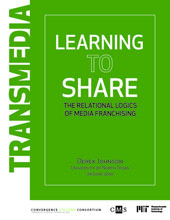
In the contemporary media environment, it has become increasingly commonplace—and commonsense—to refer to successful, long-running intellectual properties as “franchises.” In May 2010, for example, Advertising Age made sense of the sale of Snoopy, Woodstock, and the rest of Charles Shultz’s Peanuts gang to the Iconix Brand Group in these terms, valuating the history of the property and its continuing potential in the global media marketplace by exclaiming “It’s a Great Franchise, Charlie Brown” (Bulik 2010). This metaphor for making sense of media properties extends beyond trade discourse, with popular blogs also participating in the franchise conversation. In a recent post later picked up by Yahoo! News, Life’s Little Mysteries blogger Mike Avila meditates on the media franchise by trying to determine “the most successful movie franchise of all time.” Having decided to make box office revenue the deciding factor, Avila awards the crown to the Harry Potter series and its $5.4 billion in ticket sales—but with the caveat that Star Wars would gain an advantage if merchandising were to be considered, while the James Bond films exceed both in terms of overall longevity.
Such posts contribute to an overall popular understanding of the media franchise as the result of ongoing management of a property across time and various markets, corroborating the perceptions of industry insiders like Disney’s Robert Iger, who similarly defines franchise as “something that creates value across multiple businesses and across multiple territories over a long period of time” (Siklos 2009). The economic meanings carried by this metaphor, however, have also been negotiated by those working creatively with these properties, whose individual interests and energies must be asserted in the face of all this successful brand maintenance. Reflecting on the conclusion of the TV series Lost in 2010, producer Carlton Cuse notes: “We certainly understand and absolutely respect that ABC and Disney has an incredibly valuable franchise and they want to do more things with Lost, but the story we're telling ends in May” (Chozick 2010). Because Lost is understood in this way as one of the most successful television franchises of the early twenty-first century, Cuse finds it necessary as a stakeholder to reassert the role of creative individuality within the perpetual corporate management of the shared property.
This notion of media franchising, therefore, shapes how analysts, executives, creators, and popular audiences each imagine the media industries of the contemporary moment. And as Cuse’s attempt to position his work outside perceptions of franchising demonstrates, this metaphor is a particularly loaded one, often negatively connoting corporate control and exploitation of a cash cow at the expense of independence and artistry. Without a doubt, many of these connotations come from the wider cultural history of franchising. Prior to the industrial revolution, a franchise was conceived primarily in the political terms of enfranchisement. Derived from the French franchir (to free), the word “franchise” conveyed one’s right to participate and pursue one’s interests free of constraint. Within a collective system such as electoral politics, the franchise was, by and large, a freely determined individual vote. However, as historians of marketing such as Harry Kursh argue, this free right to participate took on more economic—and more sinister—connotations by the nineteenth century, as emerging tycoons “slit each other’s corporate throats” in fierce competition to be awarded “franchise” rights over utilities, railroads, and other elements of public infrastructure (1968: 194). According to scholar T.S. Dicke, the term acquired an additional use around 1959, newly deployed to describe business systems in which corporate franchisors operating on a national level develop a trademarked system of doing business enter into contractual relations with franchisees who pay a fee to independently operate outlets on the local level (1992: 2).
It is from this usage that most consumers understand global business operations such as McDonald’s restaurants, Meineke auto shops, or Best Western hotels. Thus, as industry analysts in Variety, Hollywood Reporter, and other sites of trade discourse began in the early 1990s to make sense of media content and its production as “franchising” (moving the term beyond existing usage to describe the assignment of broadcasting licenses and municipal cable monopolies as franchise rights to infrastructure), the term brought with it a great deal of historical and cultural baggage. To think about media culture as franchise is to think about it in the same terms that make sense of fast food. And in the same way that critics like George Ritzer (2000) have lamented the increasing standardization and rationalized control of culture as what he calls the “McDonaldization” of society, the articulation of media to fast food reflects allows the latter to act as cultural shorthand for the inadequacies of the former.
So while media franchising has been frequently invoked in industrial, popular, and scholarly discourse, perceptions of its economic determinism and its lack of cultural value have at least partially sidelined specific attempts to understand what the franchising of media culture actually means. In most accounts, the media franchise is a rather simple effect, figured most often as a product of increasing corporate power and conglomeration or as the endgame for intellectual property management strategies. Even as Henry Jenkins (2006), for one potentially divergent example, considers the franchised intellectual property more productively as a site where new forms of narrative practice and cultural collaboration have emerged, the media franchise is positioned and understood in relation to the larger patterns of convergence culture and transmedia storytelling. Nevertheless, media franchising is a phenomenon in its own right, not confined to specifically transmedia considerations, as properties like Law & Order and CSI have become understood as franchises for their multiplication within the single medium of television. Similarly, in The Frodo Franchise, scholar Kristin Thompson (2007) offers a detailed picture of the Lord of the Rings franchise, but in arguing about its exceptional character, her book offers only a limited perspective on the phenomenon of media franchising at large.
But what can we learn from the logic of franchising itself? What does it tell us about how cultural production and creative collaboration might work? How can we make use of this understanding? With much of this phenomenon remaining to be explored by media researchers, this project aims to directly confront and deconstruct the cultural logics of franchising in order to understand it not as the effected product of other issues and forces, but as a process and set of relationships that have historically produced culture. Though the notion of the franchise carries with it much cultural baggage, those entrenched meanings and values accompany a very specific logic for organizing and making sense of cultural production sustained over time and across multiple market sectors. By developing a detailed, historical portrait of what franchising is and how it has worked, we will deepen our understanding of how culture has been collaboratively produced and consumed across decentralized networks of “enfranchised” stakeholders. To that end, this inquiry combines current research trajectories in media and cultural studies with conceptual models drawn from the fields of marketing and organizational communication to make sense of media franchising as a social practice. This approach demands we consider franchising not solely in terms of texts, products, brands, or properties, but also through power-laden, networked relationships between franchisors and franchisees with distinct interests in the shared cultural resources of the franchise. By combining analysis of trade press with archival research and original interviews with media professionals, this project examines how these shared resources have been deployed, managed, and sustained in specific historical instances by media institutions, creative personnel, and even consumers invested in them.
Key Findings
Ultimately, this study recognizes that any attempt to define the media franchise once and for all is an exercise in futility, as its slippery cultural meanings are perhaps what make it such a versatile means of understanding a wide variety of media practices. Nonetheless, by arguing that franchising offers a cultural structure through which media content, media institutions, and media audiences have been put into productive relations, this study helps point to the relational, collaborative logic that defines a franchised culture. From this perspective, five key findings will be delivered to demonstrate the value of comprehending franchising as a structure for organizing collaborative cultural production:
The Cultural Logic of Franchising is Relational: franchising must be understood as relational given its dependence on sustained, strategic relationships between stakeholders with unequal interest in shared cultural resources; franchises are not reflective of intellectual property monopolies, but instead negotiation of imperfectly aligned interests.
Franchising Drives Institutional Relationships: the cultural networks constituted by franchising have not merely bolstered the power of “big media” institutions, but rather, in driving institutional relationships, have created tensions, cleavages and challenges to be negotiated by conglomerates and upstarts alike. The franchise strategies of companies like Marvel Comics, when most successful, have depended upon institutional partnerships.
Franchising Supports Creative Relationships: franchising must also be understood with respect to creative relationships, in that it has enabled co-creation and collaboration through decentralized, emergent uses of shared story worlds. Users of properties like Battlestar Galactica must negotiate not only the structure of a shared set of narrative resources, but also hierarchies of creative power that encourage and constrain creative uses of them.
Franchising Generates Consumer-Constituent Relationships: as shared cultural resources, franchised worlds have supported what can be described as consumer-constituent relationships. Invited to invest at a variety of productive, affective, and even civic levels, consumers act as defacto franchisees, pursuing their own economic and political interests in the institutional and creative management of programs like 24.
Franchising Extends Transnational and Transgenerational Relationships: franchises support transnational and transgenerational relations through ongoing exchange, transformation, and reinvestment. Franchises like Transformers can be most productively understood not as globally traded products, but as cultural processes in which local innovations feed cross-cultural networks of production over long periods of time.
From these findings, this project theorizes the culture of media franchising to uncover an established tradition of collaborative production in the entertainment industries. As a cultural logic structuring production in relational terms, the media franchise might therefore be considered, despite its more historical, less cutting-edge character, a crucial corollary to any attempt to understand emerging “social media.”
Recommendations
By reflecting on the heterogeneous interests in a shared set of resources implied by the term “franchise,” we gain a much clearer insight into the social, institutional, and creative relationships by which culture has been produced and reproduced in the media industries. To be sure, media franchises are not reducible to the franchise relationships that have structured the retail and service industries over the past sixty to seventy years. Relationships geared toward the expansion of distribution channels and marketing reach function much differently from those aimed at multiplying the production of media culture.
Moreover, the degree to which the cultural logic of franchises (as it has been described in this white paper) is consciously and strategically recognized in the media industries remains to be seen. Many of the executives and creative professionals interviewed for this project disavowed or distanced themselves from the very notion of franchising, claiming ignorance of the term or explaining that such considerations were outside their job description. This likely means that relatively few producers are actually thinking in any real depth about media franchises. While the practices and relationships described here may be in place, a firm structural and strategic logic may not actually underlie them in practice.
Thinking more strategically in terms of franchising—and the cultural logic it implies—has some distinct advantages, and it is here that some initial recommendations can be synthesized:
1. Practitioners should consider franchising in terms of its instructive potential as a historical precedent.
2. The relational logic of media franchising challenges industry insiders to reconsider any strategic logics structured around singular control over the use of intellectual properties.
3. In contrast to prohibitive top-down controls, open and heterogeneous creative experimentation can be relied upon to renew and regenerate existing intellectual property production resources.
4. In developing collaborative productive models, industry professionals should develop greater appreciation of contributions that emerge from outside the top echelons of power. By thinking of licensed creators and fans alike as “franchisees,” license holders can recognize vital stakeholders in the ongoing production of media properties.
Bio
Derek Johnson is an Assistant Professor, University of North Texas, Department of Radio, Television, and Film. His dissertation examined the historical development of the media "franchise" as a form based on shared intellectual property networks, as a specific set of production and consumption practices, and as a discourse used to make sense of media culture. Interested in the organization of culture across media platforms, his research spans a wide range of industries (including film, television, video games, comics, and licensed merchandising) and encompasses issues of narrative theory, audience reception, public sphere discourse, as well as media economics and policy. His recent publications include "Inviting Audiences In: The Spatial Reorganization of Production and Consumption in 'TVIII'" (New Review of Film and Television, 2007), "Fan-tagonism: Factions, Institutions, and Constitutive Hegemonies of Fandom" (Fandom: Identities and Communities in Mediated Culture, edited by Gray, Harrington, and Sandvoss, 2007), and "Will the Real Wolverine Please Stand Up?: Marvel's Mutation from Monthlies to Movies" (Film and Comic Books, edited by Gordon, Jancovich, and McAllister, 2007).
Derek can be reached directly at Derek.Johnson@unt.edu.
Transmedia Hollywood 2: Visual Culture and Design can takes place tomorrow (Friday, April 8th). Prof. Jenkins is hosting and moderating the event - along with Denise Mann of UCLA - and many CMS C3 alumni, consulting researchers, practitioners and affiliates will be in attendance.
It promises to be an important event as "Transmedia' fights its way out of its early adoption/evangelist stage - into a broader discourse on what works, what doesn't, what the future language of the medium is and will be - as well as an exploration of the artistic, creative and market-driven pros and cons of transmedia narrative structures.
Registration is still open and is available through:
TRANSMEDIA, HOLLYWOOD 2:
Visual Culture and Design
A UCLA/USC/Industry Symposium
Co-sponsored by
UCLA Producers Program,
UCLA School of Theater, Film, and Television
and
USC School of Cinematic Arts
Friday, April 8, 2011
James Bridges Theater, UCLA School of Theater, Film, and Television
9:45 AM - 7 PM
Event Co-Directors:
Denise Mann, Associate Professor, Producers Program, UCLA School of Theater, Film and Television
Henry Jenkins, Provost's Professor of Communication, Journalism and Cinematic Arts, USC Annenberg School of Communication
Overview
Transmedia, Hollywood 2: Visual Culture and Design is a one-day public symposium exploring the role of transmedia franchises in today's entertainment industries. Transmedia, Hollywood 2 turns the spotlight on media creators, producers and executives and places them in critical dialogue with top researchers from across a wide spectrum of film, media and cultural studies to provide an interdisciplinary summit for the free interchange of insights about how transmedia works and what it means.
Co-hosted by Denise Mann and Henry Jenkins, from UCLA and USC, two of the most prominent film schools and media research centers in the nation, Transmedia, Hollywood 2 builds on the foundations established at last year's Transmedia, Hollywood: S/Telling the Story. This year's topic: Transmedia, Hollywood: Visual Culture and Design is meant to move from an abstract discussion of transmedia storytelling in all its permutations to a more concrete consideration of what is involved in designing for transmedia.
The past year has seen the Producer's Guild of America (PGA) embrace the concept of the transmedia producer. The other Guilds have begun discussing the implications of these developments for their membership. A growing number of small production units are springing up across the film, games, web, and television sectors to try to create and distribute transmedia content. Many of today's new transmedia producers are helmed by one-time studio or network insiders who are eager to "reinvent" themselves. Inside the studios, the executives tasked with top-down management of large media franchises are partnering with once marginalized film directors, comic book creators, game designers, and other creative personnel.
The underlying premise of this conference is that while the traditional studios and networks are hanging onto many of their outdated practices, they are also starting to engage creative personnel who are working outside the system to help them re-imagine their business. With crisis and change comes the opportunity for the next generation of maverick, independent-minded producers--the next Walt Disney and George Lucas-- to significantly challenge the old and to make way for the new. So, now, it is time to start examining lessons learned from these early experiments. Each of the issues outlined below impact the day-to-day design decisions that go into developing transmedia franchises. We hope to break down the project of developing transmedia content into four basic design challenges:
What does it mean to structure a franchise around the exploration of a world rather than a narrative? How are these worlds moving from the film and television screen into other media, such as comics, games, and location based entertainment?
What does it mean to design a character that will play well across a range of different media platforms? How might transmedia content re-center familiar stories around compelling secondary characters, adding depth to our understanding of the depicted events and relationships?
What does it mean to develop a sequence of events across a range of different media? How do we make sure that the spectator understands the relationship between events when they are piecing together information from different platforms and trying to make sense of a mythology that may span multiple epochs?
What does it take to motivate consumers to invest deeply enough into a transmedia franchise that they are eager to track down new installments and create buzz around a new property? How is transmedia linked to a push towards interactivity and participatory culture?
As with the first event, Transmedia, Hollywood: Visual Culture & Design will bring together comic book writers, game designers, "imagineers," filmmakers, television show runners, and other media professionals in a conversation with leading academic thinkers on these topics. Each of our speakers will be asked to focus on the unique challenges they faced while working on a specific production and detail how their understanding of transmedia helped them resolve those issues. From there, we will ask all our speakers to compare notes across projects and platforms with the hopes of starting to develop some basic design principles that will help us translate theories of transmedia entertainment into pragmatic reality.
The creative personnel we have assembled include many of the key individuals responsible for masterminding the fundamental changes in the way traditional media operates and engages audiences by altering the way stories are told temporally, by exploring how graphic design translates from one medium to another, and by explaining how these visually-stunning worlds are being conceived in today's "connected" entertainment arena.
Conference Schedule
Friday, April 8, 2011
9:15--9:45 am
Registration
9:45--10:00 am
Welcome and Opening Remarks
Teri Schwartz, Dean, UCLA School of Theater, Film, and Television
Denise Mann, Associate Professor/Head, Producers Program, UCLA School of Theater, Film and Television
Henry Jenkins, Provost's Professor of Communication, Journalism and Cinematic Arts, Annenberg School of Communication, USC
10:00--11:50 AM Panel 1: "Come Out 2 Play": Designing Virtual Worlds--From Screens to Theme Parks and Beyond
Hollywood has come a long way since Walt Disney, circa 1955, invited families to come out and play in the first cross-platform, totally merchandised sandbox--Disneyland. Cut to today and most entertainment corporations are still focused on creating intellectual properties to exploit across all divisions of the Company. However, as the studios and networks move away from the concrete spaces of movie and TV screens and start to embrace the seemingly limitless "virtual spaces" of the Web as well as the real-world spaces of theme parks, museums, and comic book conventions, the demands on creative personnel and their studio counterparts have expanded exponentially.
Rather than rely on old-fashioned merchandising and licensing departments to oversee vendors, which too often results in uninspired computer games, novelizations, and label T-shirts, several studios have brought these activities in-house, creating divisions like Disney Imagineering and Disney Interactive to oversee the design and implementation of these vast, virtual worlds. In other instances, studios are turning to a new generation of independent producers--aka "transmedia producers"--charged with creating vast, interlocking brand extensions that make use of a never-ending cycle of technological future shock and Web 2.0 capabilities.
The results of these partnerships have been a number of extraordinarily inventive, interactive, and immersive experiences that create a "you are there" effect. These include the King Kong 360 3D theme park ride, which incorporates the sight, smell, and thunderous footsteps of the iconic gorilla as he appears to toss the audience's tram car into a pit. Universal Studios and Warner Bros. have joined forces to create the Wizarding World of Harry Potter, a new $200 million-plus attraction at the Islands of Adventure in Florida.
Today's panel focuses on the unique challenges associated with turning traditional media franchises into 3D interactive worlds, inviting you to come out 2 play in the studios' virtual sandboxes.
Moderator: Denise Mann
Panelists will include:
Alex McDowell, Production Designer for Tim Burton and Zack Snyder (Corpse Bride, Watchmen)
Thierry Coup, Art Designer, Wizarding World of Harry Potter
Angela Ndalianis, Associate Professor and Head of the Cinema Studies Program at the University of Melbourne, Australia (Neo-Baroque Aesthetics and Contemporary Entertainment)
Bruce Vaughn, Chief Creative Executive, Disney Imagineering
12:00--1:50 PM Panel 2: "We're Looking For Characters": Designing Personalities Who Play Across Platforms
How is our notion of what constitutes a good character changing as more and more decisions get made on the basis of a transmedia logic? Does it matter that James Bond originated in a book, Spider-Man in comics, Luke Skywalker on screen, and Homer Simpson on television, if each of these figures is going to eventually appear across a range of media platforms?
Do designers and writers conceive of characters differently when they know that they need to be recognizable in a variety of media? Why does transmedia often require a shift in focus as the protagonist aboard the "mothership" often moves off stage as extensions foreground the perspective and actions of once secondary figures?
How might we understand the process by which people on reality television series get packaged as characters who can drive audience identification and interest or by which performers get reframed as characters as they enter into the popular imagination?
Why have so few characters from games attracted a broader following while characters from comics seem to be gaining growing popularity even among those who have never read their graphic adventures?
Moderator: Henry Jenkins
Panelists will include:
Joseph Ferencz, Strategy and Marketing Manager, Ubisoft
Geoff Johns, Chief Creative Officer of DC Entertainment
Alisa Perren, Assistant Professor, Georgia State University
Kelly Souders and Brian Peterson, Executive Producers of Smallville
2:00--3:00 PM
Lunch Break
3:00--4:50 PM Panel 3: Fan Interfaces: Intelligent Designs or Fan Aggregators?
Once relegated to the margins of society, today's media fans are often considered the "advance guard" that studio and network marketers eagerly pursue at Comi-Con and elsewhere to help launch virtual word-of-mouth campaigns around a favorite film, TV series, computer game, or comic book. Since tech-savvy fans are often the first to access Web 2.0 sites like YouTube, Wikipedia, and Second Life in search of a like-minded community, it was only a matter of time before corporate marketers followed suit. After all, these social networking sites provide media companies with powerful tools to manage fans and commit them to crowd-sourcing activities on Twitter, Facebook, and elsewhere.
Given the complexities and contradictions involved in negotiating between industry and audience interests, we will ask the game designers to explain their philosophy about the intended and unintended outcomes of their fan interfaces. Marketers clearly love it when fans become willing billboards for the brand either by wearing logo T-shirts or by dressing a favorite Madman avatar in the 1960s clothing, accessories and backgrounds on display on the AMCTV.com "Madmen Yourself" and then spreading the content through Facebook and Twitter.
What is the design philosophy behind a video game like Spore, which allows fans free range to create their own creatures and worlds but then limits their rights over this digital content? Who owns these virtual creations once they appear for sale on E-bay? These and other intriguing questions will be posed to the creative individuals responsible for designing many of these imaginative and engaging fan interfaces.
Moderator: Denise Mann
Panelists include:
Matt Wolf, Double 2.0, ARG/Game Designer
Avi Santos, Assistant Professor, Dominican College and Co-editor, FlowTV.com and In Media Res.com
5:00--6:50 PM
Panel 4: "It's About Time!" Structuring Transmedia Narratives
The rules for how to structure a Hollywood movie were established more than a century ago and even then, were inspired by ideas from earlier media -- the four-act structure of theater, the hero's quest in mythology. Yet, audiences and creators alike are still trying to make sense of how to fit together the chunks of a transmedia narrative. Industry insiders use terms such as mythology or saga to describe stories which may expand across many different epochs, involve many generations of characters, expand across many different corners of the fictional world, and explore a range of different goals and missions.
We might think of such stories as hyperserials, in so far as serials involved the chunking and dispersal of narrative information into compelling units. The old style serials on film and television expanded in time; these new style serials also expand across media platforms.
So, how do the creators of these stories handle challenges of exposition and plot development, managing the audience's attention so that they have the pieces they need to put together the puzzle? What principles do they use to indicate which chunks of a franchise are connected to each other and which represent different moments in the imaginary history they are recounting? Do certain genres -- science fiction and fantasy -- embrace this expansive understanding of story time, while others seem to require something closer to the Aristoltelian unities of time and space?
Moderator: Henry Jenkins
Panelists include:
Caitlin Burns, Transmedia Producer, Starlight Runner Entertainment
Abigail DeKosnik, Assistant Professor, University of California-Berkeley (Co-Editor, The Survival of the Soap Opera: Strategies for a New Media Era; Illegitimate Media: Discourse and Censorship of Digital Remix)
Jane Espensen, Writer/Producer: Buffy the Vampire Slayer, Battlestar Galactica, Torchwood.
John Platt, Co-Executive Producer, Big Brother, The Surreal Life
Tracey Robertson, Chief Executive Officer and Co-founder, Hoodlum
Lance Weiler, Founder, Wordbook Project
Justin Wyatt, Executive Director, Research at at NBCUniversal, Inc (High Concept: Movies and Marketing in Hollywood).
7:00 PM
Reception
Lobby, James Bridges Theater
Location
James Bridges Theater, UCLA School of Theater, Film, and Television
Registration
Faculty/Students:
Tickets are $5 for faculty and students of accredited institutions and will only be sold at the box-office of the UCLA Central Ticket Office and at the door on the day of the event (prior registration required). Valid university I.D. is required. Registration includes admission to conference and reception.
Contact
UCLA Producers Program
UCLA Department of Film, Television, and Digital Media
203 East Melnitz
Los Angeles, CA 90095
Phone: (310) 206-3761
Fax: (310) 825-3383
Email: producers@tft.ucla.edu
Web: www.tft.ucla.edu/producers
Thursday March 3, 2011 | 7:00pm | 34-101On the whole, Invisible Children looks to provide humanitarian aid to displaced persons in northern, war-torn Uganda who have suffered from Africa's longest-running civil war. Moreover, they aim to provide shelter, safety, and education to children who were or would otherwise be child soldiers in the rebel army (the LRA, or the Lord's Resistance Army.)
This next chapter of Invisible Children's Bracelet Campaign is about Tony, and the struggles he faces as a child in this harsh region of the world.
The trailer for the film is embedded below.
For more information, visit the Invisible Children website.
This event is sponsored by the MIT UA funding board.
Jedidiah Jenkins--Director of Public & Media Relations, Invisible Children-- is a panelist on the following "Transmedia and Social Change" panel from FOE4.
Futures of Entertainment 5 (FOE5) - Fall 2011: Between Now and Then
We know: for those who live stateside, the Thanksgiving holiday
was simply not the same without the belly full of ideas generated from our
annual Futures of Entertainment (FOE) conference (which we usually host the
weekend before Thanksgiving).For
our international friends, we realize we did not provide the usual excuse for
your annual trip to Cambridge to visit with us and enjoy the FOE experience.
We took a break
from FOE this year – and have scheduled Futures of Entertainment 5 (FOE5)
for the fall of 2011 (date and time TBA).
For the uninitiated, FOE is the annual flagship event of the
MIT CMS C3 research project.A two-day
conference, FOE has many defining characteristics that make it a singular
conference-going experience, most notably:
Long panel lengths (which allows panel
participants and FOE attendees to really delve into the subject at hand -
transcending a pure 'market' discussion);
A commitment to a broad range of panel participants (spanning geographies, the public and the private sectors, the academy and the
corporation – and everything in between);
FOE is hosted by CMS and C3 and is held on the
MIT campus in Cambridge, Massachusetts (which allows for a different type of
regional programming than, say, a conference held in New York or Los
Angeles);
A participatory system built into the
programming of the event (appropriately named backchan.nl -- a tool developed by Joshua Green in
collaboration with Judith Donath and Drew Harry at the MIT Media Lab) –
complimented by a Twitter hashtag or two(see #FOE4).
A strong network of CMS C3 alumni, consulting
researchers and practitioners, as well as a growing list of FOE alumni who
contribute to the rigorous programming of the event for months prior to the
event.
Of course, a masterful keynote
presentation by Prof. Jenkins never hurt our cause either.
For our FOE regulars (in an effort to ease the FOE
withdrawal symptoms we will all surely experience between now and November of
2011) following is a list of upcoming conferences, panels or events taking place
in the months ahead (which will include programming, panels or topics consistent
with MIT CMS C3 and FOE):
Transmedia,
Hollywood: S/Telling the Story
In what has become our West Coast sister event, Professor
Jenkins and UCLA Associate Professor Denise Mann will be hosting another
Transmedia Hollywood event in the spring of 2011. Click here for the program from the
inaugural event – and stay tuned to Prof.
Jenkins'website for an announcement of the 2011 event.
SXSW 2011 – Prof. Jenkins has spoken many times at this
annual event. Like Sundance, always a brilliant festival.
CMS Sponsored Events:
The Sandbox Summit
2011 - SAVE THE DATE!Sandbox
Summit®, The Education Arcade and
MIT Comparative Media Studies have confirmed the dates for the 2nd
annual Sandbox Summit@MIT on April 28 and 29,
2011.Mark your calendars now for
another brain-stretching, star-studded, fun-filled event. For a look at past events, click here.
Media in
Transition 7(MIT7)–
Another flagship CMS event, held every other year on the MIT campus. MIT7 will take place May 12 – 15,
2011.For previous events, click here.
ROFLcon –
CMS Sponsored ROFLcon II last year.Check in @ the ROLFcon website for
information about the 2011 event.
The Open Video
Conference is usually held in October of each year. Click here for more information.
From our friends over at the Workbook Project, keep track of upcoming
DIYDays events here.
Finally, from our brilliant colleagues at 5D, keep track of their upcoming events
for 2011 here.